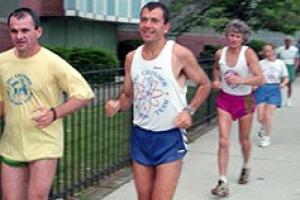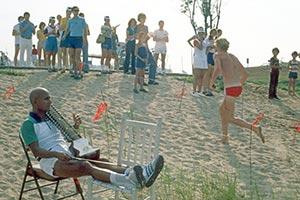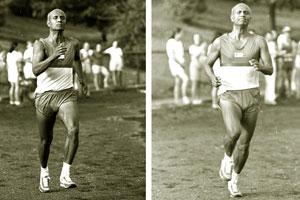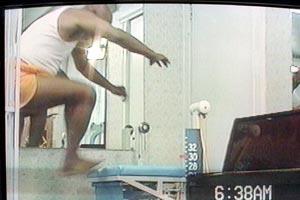
Sri Chinmoy at the 47 Mile Race. Archive footage by Utpal and Abakash.

Sri Chinmoy at the 47 Mile Race. Archive footage by Utpal and Abakash.
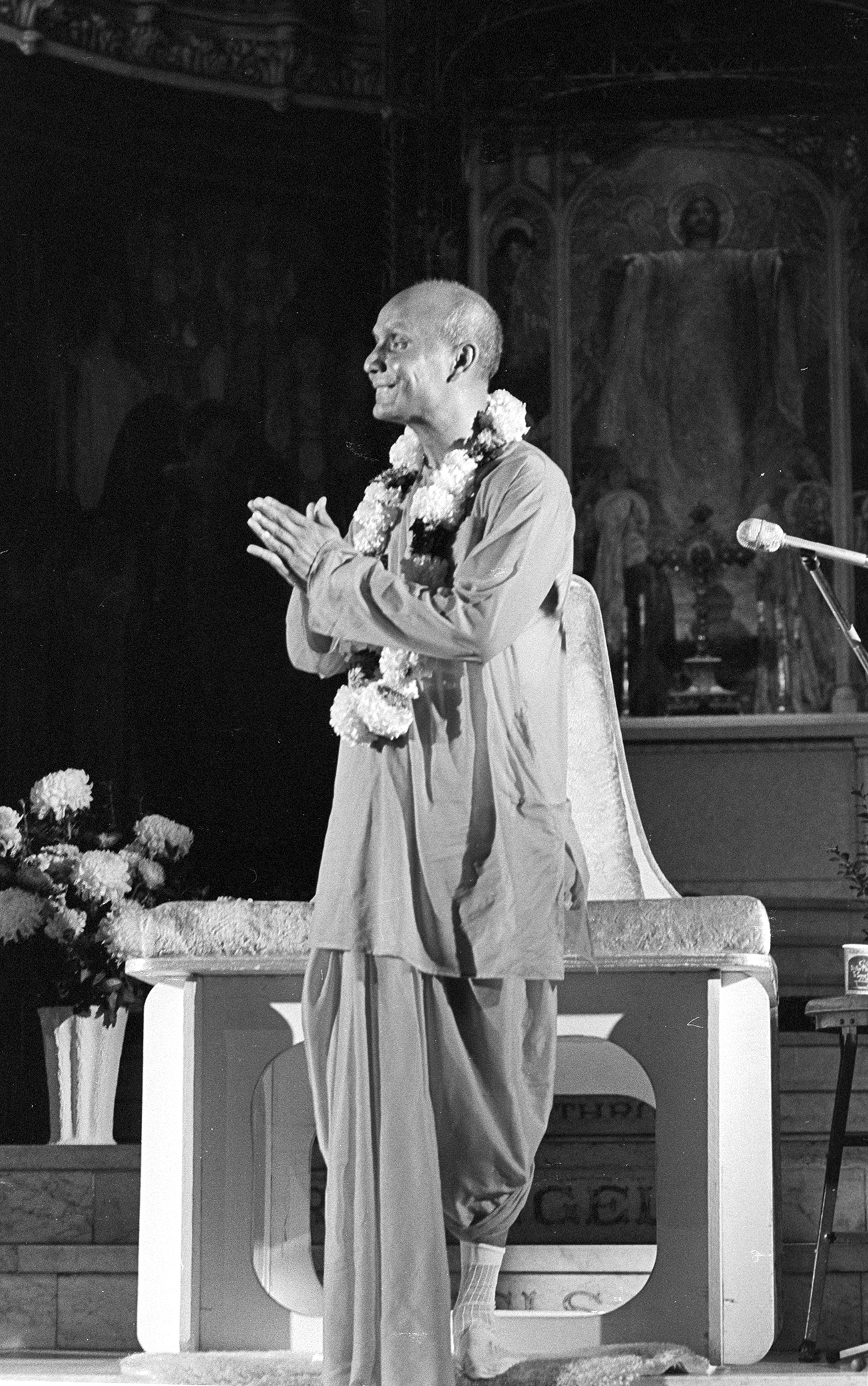
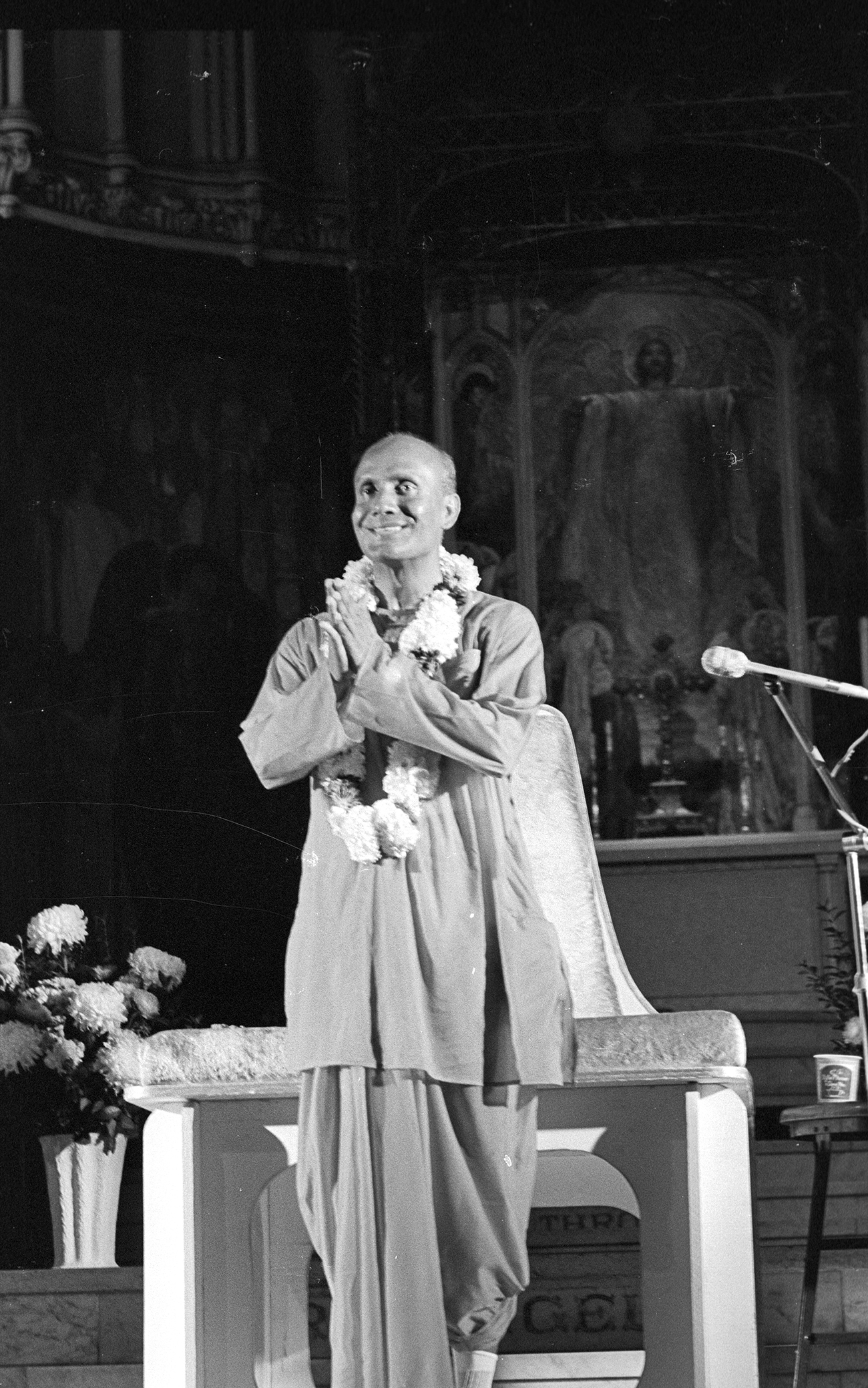
Sri Chinmoy offers a large public meditation at 7:30 p.m. at All Angel's Church in Manhattan, New York, NY, USA.
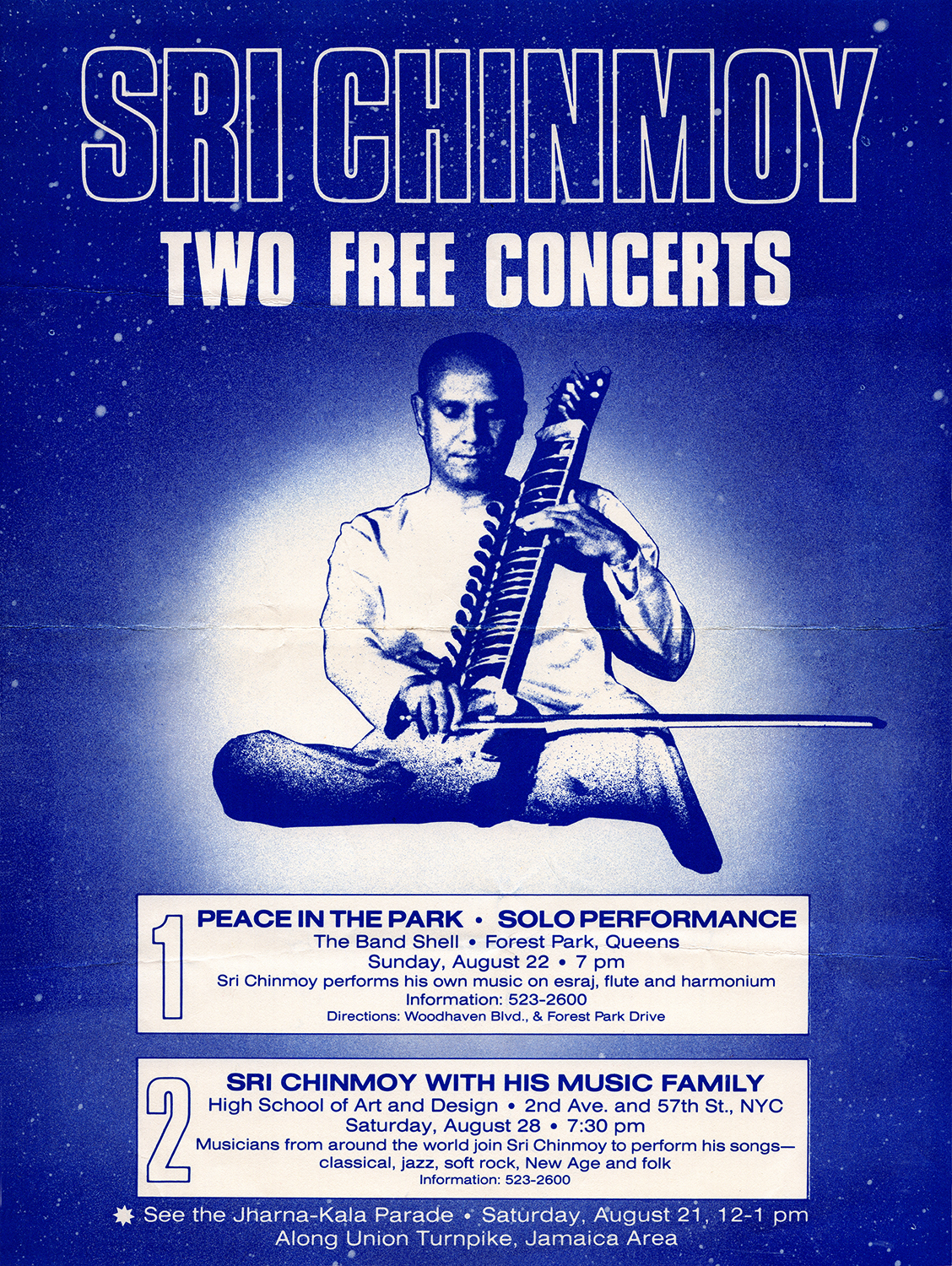
Sri Chinmoy offers a public meditation and a solo concert, called ‘Peace in the Park – Solo Performance’, at 7 p.m., held in the Seuffert Bandshell amphitheatre in Forest Park, Queens, NY, USA.
Sri Chinmoy offers a Peace Concert (312) at the Town Hall in Manhattan, New York, NY, USA.
Sri Chinmoy is awarded the honorary degree of Doctor of Philosophy and Culture from Donetsk University, Ukraine.
Sri Chinmoy achieves a personal best in the two-handed volleyball throw of 14.20 metres, in Jamaica, NY, USA.
Bolivia, Costa Rica, Lesotho and the Netherlands are declared Sri Chinmoy Peace-Blossom-Nations.
Bosnia-Herzegovina is declared a Sri Chinmoy Peace-Blossom-Nation.
Sri Chinmoy lifts 18 people in Jamaica, NY, USA.
Sri Chinmoy recounts two stories about Swami Vivekananda and Rabindranath Tagore.
Sri Chinmoy lifts 40 people in Jamaica, NY, USA.
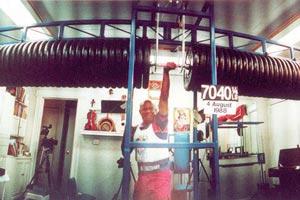
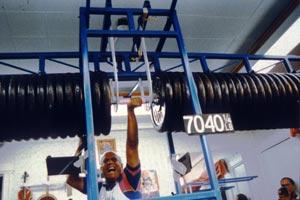
Sri Chinmoy achieves his heaviest multi-person platform lift – 6 women totalling 878 lbs. – Jamaica, NY, USA.
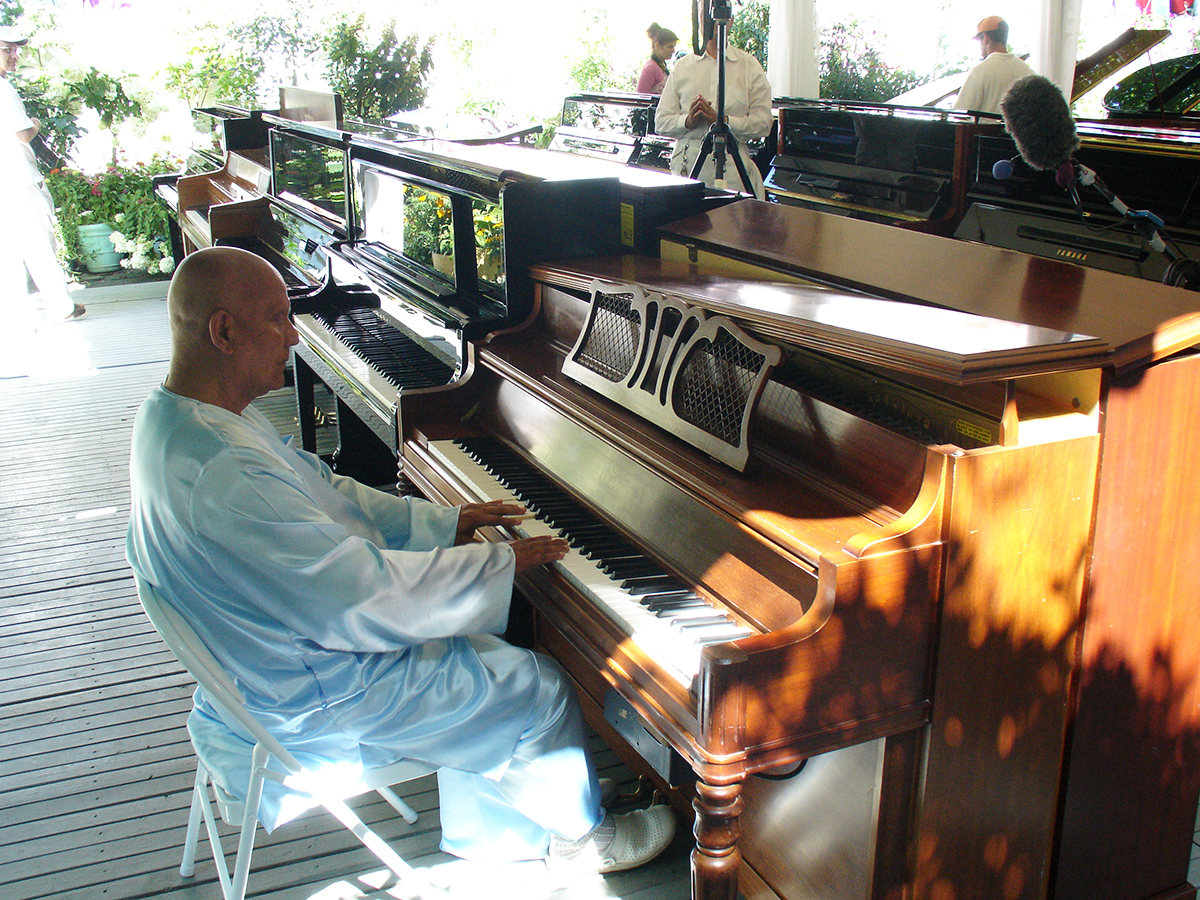
Sri Chinmoy offers a Peace Concert, performing on 74 pianos for his 74th birthday, at Aspiration-Ground in Jamaica, NY, USA. He begins at 11:07 a.m. starting with ‘The Invocation’.
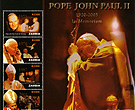
A stamp featuring a photograph of Sri Chinmoy meeting Pope John Paul II at the Vatican in 1988 is issued by the Republic of Zambia as part of a four-stamp commemorative set (Sheetlet II of 4xK3300) in memory of the Pontiff’s passing.
Video by kedarvideo
Sri Chinmoy offers a Peace Concert, performing on 74 pianos for his 74th birthday, at Aspiration-Ground in New York. He begins at 11:07 a.m. starting with ‘The Invocation’ and plays for 1 hour and 40 minutes.
Anecdote by Sri Chinmoy
Once in India I was using the starting blocks in a race. When you use the blocks your foot has to touch the ground. You cannot put your foot on the block unless it is also touching the ground. I was 100 percent sure that my foot was touching the ground, so I was surprised when the official gave me a false start. He said my left foot was not touching the ground.
The official felt sorry for me but he couldn’t tell me what I was supposed to do. He could tell by looking that my left foot was not touching the ground, but he couldn’t say anything to correct it. So I took a standing start, which is useless. Even then I won the 200-metre dash. Then afterwards he saw me on the street and said, “I feel very sorry about your timing.”
I said, “I was first.”
He said, “That is true, but if you had started from the crouching position, your timing would have been better.”
Published in Run and Become, Become and Run, part 11
An excerpt from a play by Sri Chinmoy
Published in 1972 to commemorate Sri Aurobindo’s Birth Centenary (1872-1972)
(22 August 1907. Bengal National College. The resignation of Aurobindo’s Principalship of the College. His beloved pupils request of him a few words of advice. Their faces are overwhelmed with sorrow at his resignation. He has been profusely garlanded by these students.)
AUROBINDO: I have been told that you wish me to speak a few words of advice to you. But in these days I feel that young men can very often give better advice than we older people can give.*
(One of the students stands up.)
STUDENT: Excuse me, Sir. If so, they speak of inspiration received from outstanding leaders like you.(Cheers.)
AUROBINDO: When we established this college and left other occupations, other chances of life, to devote our lives to this institution, we did so because we hoped to see in it the foundation, the nucleus of a nation, of the new India which is to begin its career after this night of sorrow and trouble, on that day of glory and greatness when India will work for the world. (Thunderous applause) … When I come back I wish to see some of you becoming rich, rich not for yourselves but that you may enrich the Mother with your riches. I wish to see some of you becoming great, great not for your own sakes, not that you may satisfy your own vanity, but great for her, to make India great, to enable her to stand up with head erect among the nations of the earth, as she did in days of yore when the world looked up to her for light. Even those who will remain poor and obscure, I want to see their very poverty and obscurity devoted to the Motherland … Work that she may prosper. Suffer that she may rejoice.
(Repeated cries of Bande Mataram. In reply one of the students stands up.)
STUDENT (with a choked voice): Words cannot express our feelings. The brilliant future of our country you have called up before our minds has impressed itself upon our hearts. We feel, too, that it can be realised by us if we have a leader of your stature to guide us. We give you our soul’s word that we will follow you, your noble ideal, your noble sacrifice.
(Loud cries of Bande Mataram.)
* Sri Aurobindo’s words in this scene are from an actual speech of his.
Published in The Descent of the Blue
Stories by Sri Chinmoy
Swami Vivekananda in his teens used to go to all the swamis, fakirs and spiritual figures, with only one question: "Have you seen God? Have you seen God?"
They observed his intense sincerity, but the answer was always the same: "Sorry, no, I have not seen God."
Some of these spiritual figures at that time had disciples as well, but each one was sincere enough to tell the young Naren, "No, I have not seen God."
Then Swami Vivekananda went to Tagore's father, Maharshi Debendranath, with the same question. Debendranath said, "I have not seen God, but I can clearly see in your eyes that you will one day realise God. Your eyes tell me that you will see God, you will realise God." And he showered boundless affection on Naren. Debendranath was the only one who could see Naren's future.
After conquering the heart of America and the West, Swami Vivekananda came back home. He went to Debendranath to pay his homage and to offer his gratitude because he had received so much affection and so many blessings from Tagore's father. Tagore's father was kindness incarnate. When he saw Vivekananda, his joy knew no bounds. His pride in Vivekananda was boundless
Tagore in writing said, "If you want to know India well, study Vivekananda." Then Vivekananda said, "If you want to know India's culture, India's heritage, Tagore is the only answer."
Published in Rabindranath Tagore: the Moon of Bengal’s Heart