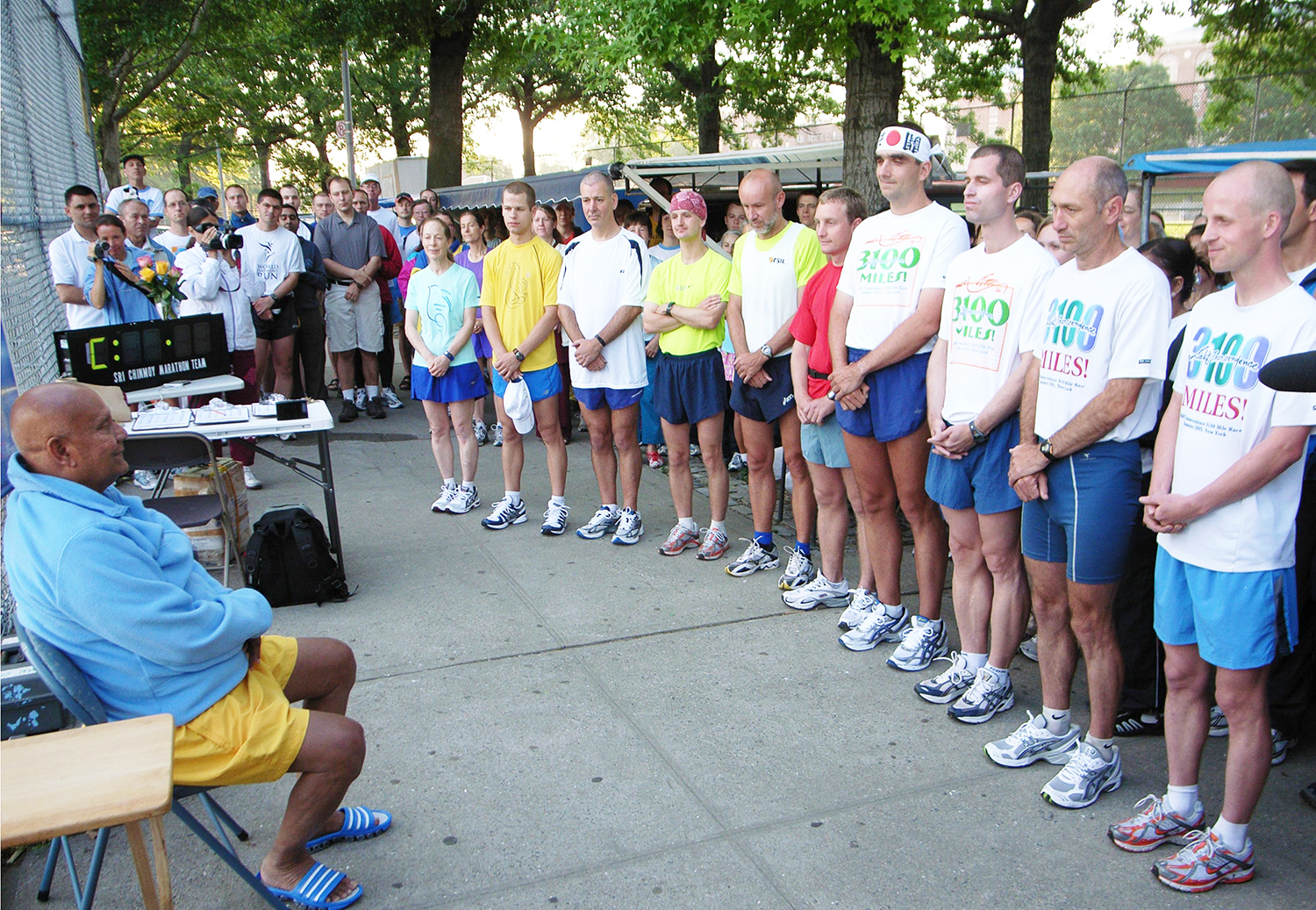
Video by Utpal Marshall
On March 3rd 1979, Sri Chinmoy completed his first marathon in Chico California in a time of 4:31:34. Each year since then, his students in New York and around the world have honoured him by running the 26-mile distance.

Video by Utpal Marshall
On March 3rd 1979, Sri Chinmoy completed his first marathon in Chico California in a time of 4:31:34. Each year since then, his students in New York and around the world have honoured him by running the 26-mile distance.
Sri Chinmoy delivers a lecture, entitled ‘The Vedanta Philosophy’, at Harvard University in Cambridge, MA, USA.
Sri Chinmoy delivers a lecture, entitled ‘Bliss’, at Guelph University in Guelph, ON, Canada.
Sri Chinmoy receives a letter of appreciation from U Thant, Secretary-General of the United Nations.
Sri Chinmoy gives a talk, entitled ‘You and I’, in the Peace Room of the Church Centre for the United Nations in New York.
Sri Chinmoy pays tribute to the great prophet Mohammed — founder of the world religion, Islam — at the Chapel of the Church Centre for the United Nations in New York.
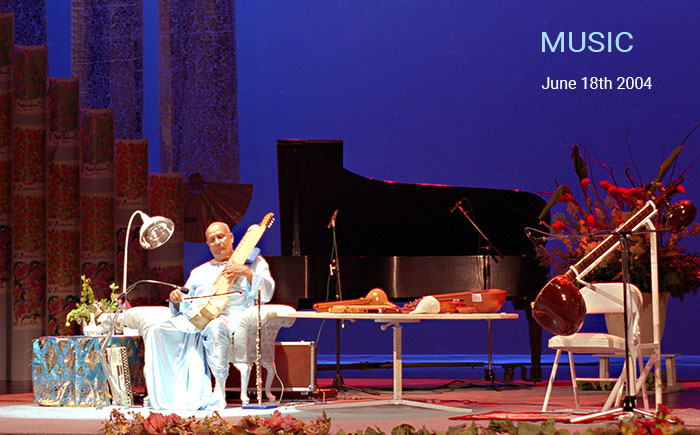
Sri Chinmoy offers a public concert at the Ethical Culture Society of New York, NY, USA.
Sri Chinmoy runs a personal best for the marathon in a time of 3:55:07 (8:58 pace) at the Heart-Watchers Marathon in Toledo, OH, USA. The temperature at the start of the race is 24°F. This is Sri Chinmoy’s second marathon, having run his first-ever marathon just 22 days earlier.
Toledo Mayor Douglas Degood declares 25 March 1979 ‘Sri Chinmoy Day’ in Toledo, Ohio, USA.
Sri Chinmoy gives an introductory talk, entitled ‘My Name is not Sri Chinmoy. My Name is Gratitude’, at a meeting with the parents of his German disciples in Cologne, Germany. At the end of the meeting, Sri Chinmoy answers questions from some of the parents.
Sri Chinmoy offers a Peace Concert at Gut Buschhof in Bonn-Königswinter, Germany.
Sri Chinmoy meets with Polish President Lech Walesa, Nobel Peace Prize Laureate (1983), and presents him with three songs he had composed in honour of Poland and the President.
Sri Chinmoy receives the Heart of Wales Award.
Sri Chinmoy lifts 26 actors from the off-Broadway hit ‘The Exonerated’ including Brooke Shields, Jill Clayburgh, Marisa Tomei, Robert Vaughn and Montel Williams after the play’s 200th performance at Bleeker Street Theatre in Manhattan, New York., NY, USA.
Sri Chinmoy inaugurates the Sri Chinmoy Invitational Marathon to be run in New York by his students who have run faster than 3:55:07 within the last 10 years.
Sri Chinmoy lifts 7 horses individually, then 3 at once, at DND Horse Stables in Forest Park, NY, USA.
NEW YORK — Sri Chinmoy and about 200 of his students were guests of honor March 25 at the 200th performance of the off-Broadway hit “The Exonerated,” for which Harit Allan Buchman is lead producer.
Afterwards, Sri Chinmoy met and lifted several current and previous cast members — including Brooke Shields, Robert Vaughn, Jill Clayburgh and Montel Williams — and other celebrities who had come for the occasion, as well as five of the former death row inmates who had been portrayed in the play.
The program included a song Sri Chinmoy had written about the exonerated prisoners, as well as a short esraj concert by Sri Chinmoy.
Delbert Tibbs, left, one of the death row inmates portrayed in the play, and Academy Award winning actress Marisa Toniei, right, pose with Sri Chinmoy after being lifted.
Published in Anahata Nada, Volume 34, November 2002 – March 2003
Sri Chinmoy runs a personal best for the marathon in a time of 3:55:07 (8:58/mile pace) at the Heart-Watchers Marathon in Toledo, Ohio.
to Sri Chinmoy
Dear Sri Chinmoy,
I just want you to know how appreciative I am for your kindness in sending me those lovely flowers which cheered me up during my moment of illness in the hospital.
I am now recuperating and hope to recover my health in a few weeks time.
Sincerely,
— U Thant
Published in U Thant: Divinity’s Smile, Humanity's Cry
by Sri Chinmoy
at the Chapel of the Church Centre
for the United Nations
The world is celebrating the birthday of Mohammed, the great prophet. On behalf of the United Nations Meditation Group I wish to offer our soulful salutations to this great prophet.
Mohammed was the founder of the world religion, Islam. When he first saw the light of day, he saw the face of poverty too. Poverty dogged him and tortured him practically from the start to the finish of his earth-journey.
He prayed on Mount Hira. Illumination dawned. The angel Gabriel appeared and declared him the prophet of God. In Mohammed and with Mohammed a new and true religion-flower began to blossom. The prophet offered two courses, lower and higher. The lower course ran like this:
“The sword is the answer to the world’s problem-question. Conquest is the answer to the world’s difference-opinion. No compromise, no compromise. Declare war and conquer once and for all.
“If you really want to keep the world-citizens at your feet, under your feet, to grant them your own illumination in your own way, then fight, fight. Victory-dawn, satisfaction-sun are for the brave.
“O Muslims, O followers of mine, indeed, you are those dauntless soldiers of true Truth.”
Mohammed’s higher course ran like this:
“Abandon idolatry. Conquer the pleasure-life in yourself. Conquer the sense-world in yourself. Replace them with purity’s beauty.”
Yes, like other mighty prophets, Mohammed too had a world-illumining message: There is one God and He is great. Alahu Illah Akbar. Worship the One, the one true God. Nothing more. Nothing less. He is everything in everything and everything of everything.
The Koran, the great voice of his good soul, was fed sumptuously and energised considerably by the lighthouse of the Old Testament. To our sorrow, the Cross and the Crescent are not good friends. Blind rivalry reigns supreme. But to our joy, one is serving the Father and illumining mankind according to its height of compassion-salvation. The other is serving Allah and illumining mankind according to its height of dedication-satisfaction.
Mohammed, O world prophet, to you we offer our soul’s obeisance.
Published in Union-Vision
Sri Chinmoy meets with Polish President Lech Walesa, Nobel Peace Prize Laureate (1983), at the Polish Consulate in New York City. There, Sri Chinmoy presents three songs he had composed in honour of Poland and the President.
An extemporaneous talk by Sri Chinmoy
at Harvard University, Cambridge, Massachusetts
Seventy-three long years ago, precisely on this very date, the great spiritual giant, Swami Vivekananda, dynamically blessed this University, the University unparalleled in the whole of the United States of America, with his august presence. He spoke on the Vedanta Philosophy. And today I am invited to speak on the same lofty subject. Seventy-three springs later, call it a mere stroke of fate, call it a destined, divine dispensation, on this most fruitfully significant day, both spiritually and historically, I am at once proud and blessed to associate my humble name with him, Swami Vivekananda, a spiritual hero of the Himalayan peak.
Thomas Jefferson, on being made Envoy to France, remarked, "I succeed him (Benjamin Franklin), no one could replace him." With all the sincerity at my command, I dare neither to replace nor to succeed Swami Vivekananda, but, as a son of Bengal, I wish to bask in the unprecedented glory of Sri Ramakrishna’s dearest disciple, a unique son of Mother-Bengal.
O Harvard University, I tell you a sweet secret of mine. Perhaps you have heard about the Royal Bengal Tigers. The fear of these tigers ruthlessly tortured my infant heart. O Harvard, your very name used to create almost the same fear in my mind in my adolescent days. But today, to my extreme surprise, you have awakened enormous joy in my heart.
Vedanta means "the end of the Vedas"; indeed, this is purely a literal meaning. Otherwise, Vedanta has a reservoir of countless meanings: religious, philosophical, moral, ethical, spiritual, earthly human and heavenly divine. Vedanta reveals guideposts for a spiritual pilgrimage — a pilgrimage towards the absolute Truth. This pilgrimage welcomes all those who soulfully cry for the Transcendental Brahman. The earth-bound mind is too feeble to enter into the Truth Absolute.
"“The words return with the mind fruitlessly endeavouring to express what Truth is."
This truth sublime we learn from the Vedas.
Sarvam Khalvidam Brahma (Verily all this is Brahman). A true lover of Brahman must needs be a true lover of mankind. Never can he see eye-to-eye with Samuel Johnson, who voiced forth: “I am willing to love mankind, except an American.” Needless to say, the teachings of Vedanta are marked by a rare catholicity of vision. Always.
Vedanta welcomes not only the purest heart, but also the scoundrel of the deepest dye. Vedanta invites all. Vedanta accepts all. Vedanta includes all. Vedanta’s inner door is open not only to the Highest, but also to the lowest in human society.
India’s Shankaracharya is by far the greatest Vedantin that our Mother-Earth has ever produced. At the dawn of his spiritual journey, before he had attained to the Consciousness of the Absolute Brahman, a certain feeling of differentiation plagued his mind. Hard was it for him to believe that everything in the universe was Brahman. It happened that one day Shankara, after having completed his bath in the Ganges, was returning home. He chanced to meet a butcher — an untouchable. The butcher, who was carrying a load of meat, accidentally touched Shankara in passing. Shankara flew into a rage. His eyes blazed like two balls of fire. His piercing glance was about to turn the butcher into a heap of ashes. The poor butcher, trembling from the sole of his foot to the crown of his head, said, “Venerable Sir, please tell me the reason of your anger. I am at your service. I am at your command.” Shankara blurted out, “How dare you touch my body which has just been sanctified in the holiest river? Am I to remind you that you are a butcher?”
“Venerable Sir,” replied the butcher, “who has touched whom? The Self is not the body. You are not the body. Neither am I. You are the Self. So am I.” The Knowledge of the One Absolute dawned on poor Shankara. People nowadays in India claim that the butcher was no other than Lord Siva who wanted Shankara to practise what he was preaching. Also according to many, Shankara was an incarnation of Lord Siva.
However, by no means should we neglect the body. The body is the temple. The soul is the Deity therein. Have we not learned from Vedanta that it is in the physical that the spiritual disciplines have to be practised.
Lo and Behold, Walt Whitman is powerfully knocking at our heart’s door: “If anything is sacred, the human body is sacred.”
The five cardinal points of Vedanta are: the Oneness of Existence, the Divinity in Man, the Divinity of Man, Man the Infinite and Man the Absolute.
Vedanta expresses itself through three particular systems: Advaita or Non-Dualism, Vishishtadvaita or Qualified Non-Dualism and Dvaita, Dualism. These three ancient systems developed large sects in India, which were later shaken by the arrival of Buddhism. Buddhism shook the Vedic-Upanishadic tree. India is eternally grateful, therefore, to Shankara for the revival of the Non-Dualistic system, to Ramanuja for the Qualified Non-Dualistic System and to Madhava for the Dualistic System.
Shankara’s Advaita or Monism: There is only one Reality. And this Reality is Brahman. Brahman and Brahman alone is the Absolute Reality. Nothing does or can exist without the Brahman. To our sorrow, the world has misunderstood Shankara. He is being misrepresented. If one studies Shankara with one’s inner light, one immediately comes to realise that Shankara never did say that the world is a cosmic illusion. What he wanted to say and what he did say is this: the world is not and cannot be the Ultimate Reality.
Shankara saw the light of day in the eighth century A.D. In those days, spirituality was on the wane in India. The Indian spirituality or, should I say, the Hindu spirituality, was undergoing a serious operation while a good many pseudo-religious sects were growing like mushrooms. The Supreme commanded Shankara’s appearance on Indian soil to cast these unhealthy sects aside and re-establish one religion, the religion of the Vedas, the sanatana dharma, the eternal religion. Shankara advocated monism. This monism is the oneness absolute of the universe, man and God.
The Buddha stole God’s Heart and Compassion; Shankara, God’s Mind and Intellect; Chaitanya, God’s Body and Love; Ramakrishna, God’s Soul and Vision; Vivekananda, God’s Vital and Will.
India’s champion philosopher, Shankara, founded modern philosophy in India. Europe’s champion philosopher, Spinoza, founded modern philosophy in Europe. America’s champion philosopher, Emerson, founded modern philosophy in America.
Shankara’s Kevala Advaita is above all dualism. In his monism, there is no room for relative things, relative values, the pair of opposites, for all these come and go, appear and disappear. What is eternal is the Transcendental Brahman. Ekam eva advitiyam (“That is one without a second.”)
Shankara’s philosophy has dealt considerably with Maya. Maya literally means “illusion”. But what it really means is measurement of extension; it refers to a kind of conception. When we want to conceive and express the Truth, with our incapacities or our very limited capacity, Maya offers its help and comes to our rescue. But the Brahman, being Infinite, escapes both our conception and expression. Maya is the power that causes the world to be really real and, at the same time, distinct from the Universal Soul, to be part of God and at the same time, distinct from God. Maya is a power, a mysterious power, a power always inconceivable.
To quote Swami Bodhananda: “Shankara confesses his ignorance about this power, but he assumes it as a fact. Just as we assume electricity as power, but we don’t know what electricity is. He accepted Maya as a power, as a fact. Centrifugally it is the becoming of the one, this absolute spirit, into the many and centripetally the rebecoming of the many into that one. So, in this way Maya is an eternal power. By this power Brahman projects Himself in the forms of God, man and universe. These are inseparable from Maya, as well as from Brahman.”
Shankara and Vedanta will always go together down the sweep of centuries. They are like twin souls.
Ramanuja’s Vishishtadvaita or Qualified Non-Dualism
According to Ramanuja, the world is real, absolutely real. But it is wanting in perfection. At the same time, it does not care for perfection. It has no destined goal. The world was created by God’s inspiration, is sustained by His concern and will be dissolved by His Will. The world is God’s playground. He performs His Lila (drama) here. This eternal Sport of His is His constant movement, spontaneous expression in endless repetition. Man is real. But he has to depend on God. The world is real. But it has to depend on God. Without God, both man and the world are meaningless futility. Man can be released and will be released from the meshes of ignorance one day and is bound to realise God. But there will always remain some difference between man and God. Man will remain eternally below God. Hence he always has to worship God. Ramanuja’s path is mainly the path of Devotion. He stands firm against the theory of Shankara’s undifferentiated Kevala Advaita. To him, the Brahman is and can only be personal. A true aspirant can realise the Highest Truth and achieve the Knowledge Infinite while he is still on earth.
Madhava’s Dvaita, Dualism
Madhava’s philosophy affirms the complete duality between the Brahman and the self (the small self). God, man and the world have a permanent existence. But man and the world have to depend solely on God for their existence. God is at once above the universe and in the universe. God has a divine body that transcends all our human imagination. Nothing can be done on earth without God’s immediate concern, direct approval and express command from the inner planes. The Supreme Will of the Supreme guides the world. It pilots the world to its destined goal. Man can be free from the shackles of ignorance only when it is the Will of the Supreme. Liberation is not only possible, but inevitable. What is absolutely essential for liberation is man’s loving adoration of God.
Now I wish to tell you what I feel about Vedanta. Just utter once soulfully the word Vedanta. Immediately you will have the effect of a magic spell on you. Sooner than at once your heart is inspired, your consciousness elevated and your life illuminated.
To my sorrow, in the consciousness of the Western world the idea of sin is extravagant. A Vedantin’s dictionary does not house the word sin. What he knows within and without is a series of obstacles — doubt, fear and desire. He feels that he must not doubt the Divinity within him. No earthly fear does he allow to take birth in him. No desire, significant or insignificant, can ever blight the purest heart in him. We are very often inclined to see ignorance all around, while a Vedantin is justifiably apt to see the underlying Truth here, there and everywhere.
Religious people, especially the spiritual ones, cherish abundant joy in their feelings that they live in God’s world, in one undivided world. Each individual is a true brother to them. The sense of brotherhood reigns supreme on their all-loving heart. A Vedantin’s heart is fully at one with them. He goes one step ahead. He sublimely addresses: Tat Twam Asi, That Thou Art. He sees and feels each human being as the embodiment of the Absolute Brahman.
Vedanta means freedom, freedom from limitations, freedom from bondage and freedom from ignorance. America is the land of matchless freedom. The American soil is exceptionally fertile for God to grow the Vedantic truth in measureless measure. Vedanta's freedom is the inner freedom. When the inner freedom comes to the fore and guides and directs the outer freedom, the outer freedom unmistakably and gloriously runs towards its destined Goal, the Goal of manifestation of God’s infinite Truth, Peace, Light, Bliss and Power here on earth. The inner freedom is the realisation of the Eternal. The outer freedom is the manifestation of the Infinite. When the inner freedom and the outer freedom soulfully and divinely run abreast, today’s man changes into tomorrow’s God.
I wish to conclude my talk with a word about your universally cherished student John F. Kennedy. I would like to offer to his hallowed memory and his soaring aspiration today’s talk, our collective dedication, our unifying love and our united achievements.
Published in AUM – Vol. 5, No. 4, 5, Nov. – 27 Dec. 1969
A talk by Sri Chinmoy
in the Peace Room of the Church Centre for the United Nations in New York
You have renounced world-bondage to please God;
Therefore, God is pleased with you.
I really mean it.I have accepted world-suffering to please God;
Therefore, God is pleased with me.
I do hope that you know it.You have pleased God
By crying for His Self-transcendence Height.
I have known it all along.I have pleased God
By loving His compassion-fulfilling earth-life.
I am informing you in case you did not know it.You and I have pleased God soulfully and triumphantly;
Therefore, we are divinely human and humanly perfect.
Published in AUM – Vol. 2, No. 5, 27 May 1975
An introduction by Sri Chinmoy
at a meeting with parents of his German disciples in Cologne, Germany
My name is not Sri Chinmoy. My name is gratitude. I am your Indian son. Your Indian son is speaking to you from the very depths of his heart.
God is our Father, God is our Mother, God is our Brother and God is our Sister. God is everything to us and everyone to us. There is only one God. My God and your God are both the same God. I am not God. God is Someone who is inside my heart, inside your heart, inside everybody’s heart. And I am not the Guru. God is the only Guru, for it is He who illumines us, liberates us and makes us perfect instruments of His.
As you know, in a family, there is an eldest member and a youngest member and again, quite often there are a few in between. But they are all children of the same parents. Even so, in a spiritual family, there will be someone who is the oldest, someone who is the youngest and others in between.
In a family, the eldest member is often asked by the parents to take care of the little ones — to help them, guide them and tell them about their parents. The oldest one knows many more things than the younger ones, so the father or mother asks the eldest child of the family to tell the young ones about their parents.
In the same way, I am being asked by God to tell my younger brothers and sisters about Him. Your children are my younger brothers and sisters, so it is my bounden duty to speak to them about our Heavenly Father, God. Being the eldest member of this spiritual family, I am being asked to tell my dear brothers and sisters about our Father and where He can be found. Our Father is here, there and everywhere. But my goal is to show them where the Father can be seen and felt most powerfully and convincingly, and to take them to the Father. That is my only goal.
I am not the Father, but I am the brother of your children, their eldest brother. You do not mind when your oldest son or daughter speaks to the younger ones about you and gives them more knowledge, more information, more wisdom about you, for you know that they are all your children and they are all for you. You get tremendous joy that they are yours — your children, your creations. As I mentioned before, you are my dear German parents and I am your Indian son. So we are all your children, and we are all in one boat. We call this boat the Golden Boat, and our Pilot Supreme is steering the Boat. We, His children, are seated in His Boat, and He is taking all of us to the Golden Shore, where there is no suffering but only light and delight.
Alone, I cannot do anything and I will never be able to do anything in this world. Yesterday you saw that thousands of people came to our Peace Concert. It was like a family gathering where all the members came together to celebrate. All my German brothers and sisters helped me far, far beyond my imagination to have this concert, this spiritual family reunion.
Your dear and sweet children yesterday accomplished something most significant for our Beloved Supreme. It was an unparalleled achievement, and it was all done by virtue of tremendous, tremendous loving sacrifice from your own children. The parents’ creation is their children. In their children’s joy will always be the parents’ joy. If a child gets joy from playing with dolls, then the parents will get joy from watching their child play with dolls. They will get tremendous joy on the strength of their identification with their child. Therefore, I am sure that on the strength of your inseparable oneness with your children, you are also receiving the same kind of joy and satisfaction that they are experiencing now.
You have already proved your inseparable oneness with your children by coming to Cologne. Some of you have travelled hundreds of miles. In this way you have already proved your oneness with your children. Your hearts’ love for them is boundless and their hearts’ gratitude to you today is also boundless. To each of you, my German parents, I am offering my heart of love and my heart of gratitude soulfully and unconditionally. My German parents, your greatness has surprised me, and your goodness has nourished my heart, my inner being. In a few days I shall be leaving Germany, but I shall not go back home alone. I shall carry you all inside the very depths of my gratitude-heart.
Published in Sri Chinmoy Answers, part 33
Question: I find everything about your path nice, but I do not understand why something from another culture has to come in.
Sri Chinmoy: For me, there is no such thing as Germany, India, America or Africa. For me, there is only one country, and that is God’s entire creation. God’s creation is nothing other than God Himself, for God the Creator and God the creation are one.
Suppose that God has four sons and they are all living in different places. One is in Germany, one is in Japan, one is in Italy, and one is in India. Just because they live in different countries, they will keep different things in their houses, they will follow different cultures and have different ideas. But, since they are all brothers and sisters, they will share what they have with one another. One brother will go to another brother and say, “This is what I have for you.” Then the second one in turn will give the first brother what he has. It is only an exchange. It is not a question of bringing in a new culture. There is only a feeling of oneness that all the brothers share.
I am an instrument of God, a servant of God, a child of God. Today God is telling me to go to a particular place and be of help to one brother. Tomorrow He may say, “Now go to some other country and help another brother of yours. You have many brothers and sisters, and I want you to go and help them all.” All these countries are the Father’s creation. It is all oneness.
For me, there is no such thing as an Indian God or a Christian God. For me, there is only the Absolute Supreme. When I pray to God, at that time I do not say, “O my Indian God.” When you pray to God, you do not say, “O my Christian God.” We both say, “O my Heavenly Father.” At that time, Heaven is not divided into pieces. We do not say, “This is India, this is Germany, and this is France.”
Question: My son studied chemistry and now he wants to open a health food shop. Do you not feel that he should use his talents in a higher profession?
Sri Chinmoy: God is all joy. He wants to give us joy in our own way. If someone gets more joy by working in a restaurant instead of becoming a great doctor or lawyer, then God will say, “Do what gives you joy. If this is what you want, then do it.” Again, there are many lawyers and doctors who are extremely happy in their profession because they wanted that profession. But, who knows, perhaps there are some who are very unhappy because they made the wrong choice.
If your son does not get happiness by working as a chemist, and if he receives tremendous joy by working at a health food store or in some other field, then I feel he should do what gives him joy. Otherwise, even if he becomes a great chemist, he may be very unhappy.
Our mind may think that a shopkeeper is inferior to a doctor or lawyer. In God’s Eye, we are all one. In a drama, somebody plays the role of a king, somebody else plays the queen, and somebody else is a servant. If everybody plays the role of a king, and there are no ministers or servants, then there is no play.
Whether I am a doctor or a shopkeeper, what really matters to God is whether I am a good person. If I am a good person, then no matter what I do, I am far better than a bad person. If I follow the spiritual life, it does not matter whether I am a businessman or a doctor or a lawyer or a school principal. All that matters is that I am getting joy. If I get joy by being a businessman, then I am doing the right thing. If I get joy by being a doctor or a lawyer, then I am doing the right thing. God only wants us to be happy.
The whole world loves and adores the Saviour Jesus Christ. Why? Because he gives boundless inner joy, peace and love to everybody. Does it matter that earlier in his life he was only a simple carpenter? Not in the least. In India also, there are many spiritual figures who came of humble origins, but still they are loved and worshipped. Sri Ramakrishna, for example, came of a very, very poor village family. Later he worked as a priest in a small temple. But the world remembers him and spiritual Masters like him because of who they were and what they did spiritually, not because of their profession. If someone is a good person and loves God, whatever job gives him the most joy is the best.
Published in Sri Chinmoy Answers, part 33